Focusing with Children – The art of communication in therapy and facilitation
by Elaine Goggin
The newly released practice book ‘Focusing with Children – The art of communication in therapy and facilitation’ by Harriët Teeuw and René Veugelers is a wonderful addition to the growing resources in the world of Children and Focusing. Written from their combined experience of being with children in their own unique way as Focusing Trainers and Art Therapists, this book is more of how to ‘be’ with children than how to ‘fix’ things when challenges arise.
From the beginning, this book invites the reader to look after their own process during interactions with the children in their lives. This, the authors say, facilitates the child’s own natural process to unfold in a way that makes space for a child to move forward and discover ways of living that allow them to thrive.
The book begins by gently introducing us to Focusing and how it can be a supportive way of tapping into the child’s natural ability to hold and process their own knowing. It shows us how we can be with the child, using helpful suggestions, creating the right environment and atmosphere for the child’s natural process to engage and how to support this process to its natural completion.
For me the first part of the book is the most important: creating the type of environment for the child is a wonderful gift you can give them. There is a particularly helpful chapter called ‘First aid for process disrupters’ which gives guidance and suggestions on supporting the child through a Focusing process despite distractions or disengagement. Harriët and René’s experience is evident throughout the book and you can sense their calm and open presence as they describe different interactions with children, and how they continued to be with the child throughout the whole session.
The second part of the book has over 35 different exercises that you can use to introduce the child to the Focusing process or engage in Focusing as a facilitator. It is divided into 4 groups,
- Creating Space
- Making contact
- Deepening contact
- Completion
These are excellent exercises that are clearly well established and explained very well. They are also very valuable for dipping into your own inner child work, which is also encouraged throughout the book.
In my opinion this is an exceptional book that is crucial in the world right now, a world where children are constantly being challenged and influenced from outside sources. It’s great to have a resource like this for the adults in their lives. It helps us create a healthy environment in which children are encouraged to listen to their own innate knowing. Children and young adults today don’t have space or time to day-dream or be bored nowadays, so they may not have a way of turning towards inner listening. This book helps to create that space and demonstrates ways to encourage this type of listening and process unfolding. Hopefully, this will empower young people to develop and trust their own inner knowing, becoming less reliant on outside sources and influences.
Thank you René and Harriët, for creating this wonderful resource for the Focusing community and beyond. I am so happy to see the joy and enthusiasm that you have shared in a book format. It means that everyone can access whenever they need your wise and supportive ways of being with children. Keep up the amazing work in spreading your love for Focusing with Children.
If you are in Ireland this book can be purchased from Mary Jennings by emailing her at
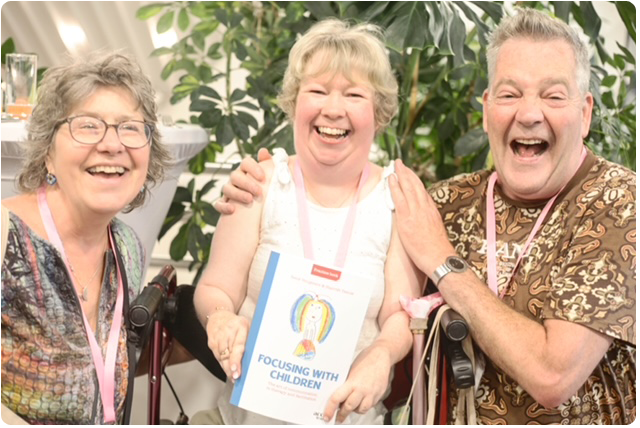
Harriët Teeuw, Elaine Goggin and René Veugelers
Mia Leijssen “Connecting With Your Essence: A Path to Awareness and Healing” Lanoo, Nov. 2025.
Mia Leijssen is a long-time Focusing Teacher and Psychologist and a former university professor from Belgium. 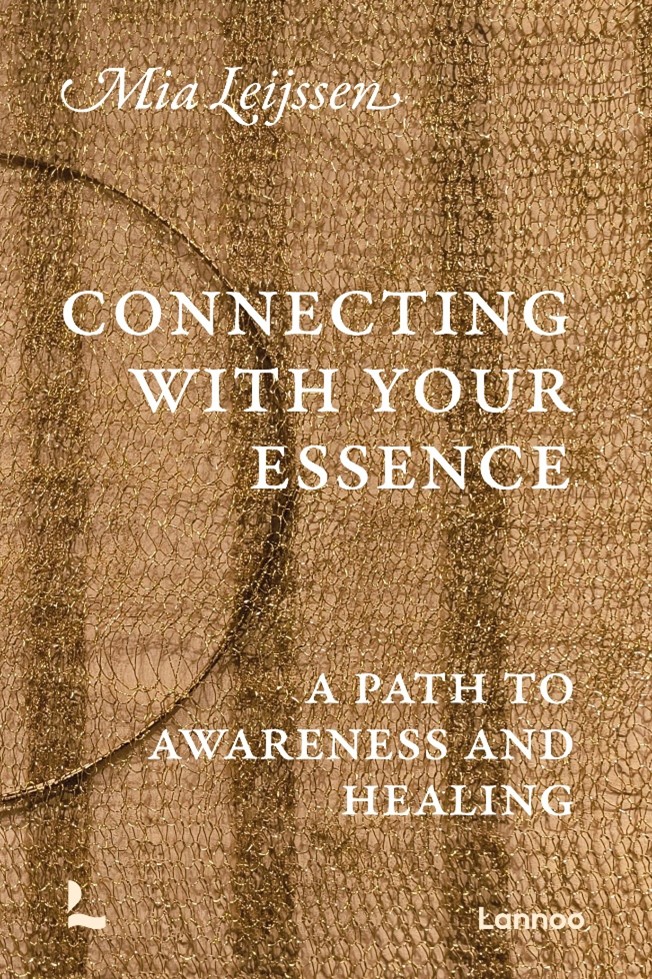
Mia begins her book by distinguishing between the ‘historical self’ and the ‘essential self’. In fact, it would appear that the whole purpose of the book is to find the ‘keys’ which would allow us to access and express our authentic selves, our essence. In the first chapter, she points to Focusing as one of those keys and she goes on to proffer a brief but concise description of the method.
She looks to the natural world for inspiration and for a framework to put forward her ideas. Here, she employs the ancient system for understanding the make-up of our bodies, our world and the universe – the five elements; earth, water, fire, air and ether/space. Throughout history these elements have been associated with human processes, here for example are a few – Earth with grounding and solidity, Water with mobility and overcoming obstacles, Fire with energy and engagement, Air with breathing and resilience and Ether/Space with spirituality and essence. She uses these as a framework to set out her theory, giving three chapters to the first four elements and dedicating three chapters to the fifth, indicating the main concern of the work. In this way, there is almost a line of development from the natural/physical to the personal/psychological to social and spiritual. She says that we can look at these elements of the natural world as a form of mirroring of our inner world. If we are attentive to these ‘mirrors’ where life energy shows itself, we can become aware of our own energy management. She states that, “awareness of your connection with those elements and rediscovering the natural movements in those processes within yourself, can provide you with important keys to unlock direction, meaning and purpose in your life” p.10. Indeed, becoming aware of our lack of, or excessive attention to, one or more of them can also provide us with valuable insights into our state of being and development.
Mia then turns her attention to the element, ether, and to peoples’ more subtle experiences. She acknowledges that these are difficult to find words for. She sets out to demystify what people might think of as extraordinary or transpersonal experiences and she offers a way to speak about and to describe the subtlety of these processes. She asserts that, “Qualities from the element ether translate into human interactions as … pure qualities that transcend self-interest; such as compassion, authenticity, wisdom, creativity, beauty, joy, contentment, forgiveness, gratitude, hope, love ... qualities that are also cultivated in spiritual and religious traditions” p.94. She suggests that it is often the most difficult and dramatic experiences that can put us in touch with what is most essential. She proposes that if we “practise on a daily basis to develop pure qualities in ourselves, we gradually experience their profound effects and have their extraordinary potential at our disposal, even in crisis situations.” P.95. The medium for this development is the body as a living process interacting with the environment. She goes on to offer ways of practising pure qualities in ourselves through the ‘keys’ mentioned above and other processes like daily rituals. Importantly, she emphasises the necessity of people finding their own way, their own keys to connect with what is essential.
The book is very much grounded in a lived reality - throughout the book, Mia illustrates the concepts with many experiences from her own and other peoples’ lives, all of which I found very engaging and relatable. While very specific and personal these stories/experiences also have a universal quality. In addition, she draws on scientific research and current findings to enhance and support her insights and proposals. I certainly found this book thought-provoking, mind-expanding, encouraging and inspiring (in both senses of that word). It is a book that repays attention. This brief review can touch on some aspects – there is great depth, richness and wisdom to be found within its pages.
The final section of the book outlines a number of exercises which readers might find useful. In fact, rather than beginning at the beginning, I recommend readers first skip to this section - specifically the exercise on “Reading in a Focusing Manner”. Here Mia provides readers with a way of reading passages slowly and taking the time for the reading to land within us.
As part of the Living Process series on YouTube, you can watch Greg Madison conduct an interview with Mia talking about her book at https://www.youtube.com/watch?v=Tcv5Xd_GqiM.This is a wonderful complement to the book where she talks about how the book came about and offers some more insights into the topic covered in the book.
By Tom Larkin