



A reflection on the first in-person gathering of the Irish Focusing Network
A reflection on the first in-person gathering of the Irish Focusing Network
Caroline Moore
On the 17th of September past, the Irish Focusing Network held its first in-person gathering since pre-pandemic times. Held in the fabulous Margaret Aylward Centre, Glasnevin, we were treated to a very special space; with its open-plan central areas, bright, airy meeting rooms, private nooks and crannies for pairwork, and beautiful views out onto the fabulous grounds, it felt purpose built for focusing. Instantly I felt myself relax.
When I entered the tea & coffee area, I experienced such joy to see so many familiar faces from Zoom meetings and past events - in real time - with whole bodies! Remembering the giving and receiving of hearty hugs that ensued brings tears to my eyes as I write - "too long… so needed… much gratitude", are the words that come.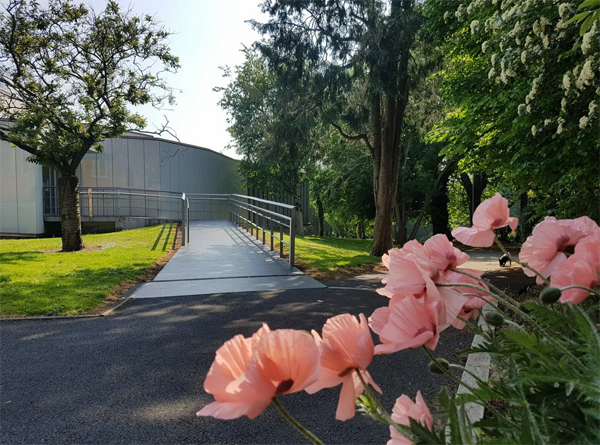
We settled into our 1st session with John Keane, for an exploration of Bio-spiritual focusing, based on his work with children. We were guided through a beautiful process to connect with positive times in our lives, a sort of "resource grid" of positive memories and relationships, as a grounded starting point for further work. I was excited, seeing great potential for this in my work as a teacher… though I also began becoming aware of something in me that was unsettled…
We then chose a Teddy bear from a selection, and imagined holding the Teddy as someone who cares for us has held us. I struggled greatly with this, and at the break when a friend offered to focus with me, I gratefully accepted. Oh the wonder of in-person gatherings - for my need to be seen and held, for the creation of safe space with gentle reflection, as I connected with that tender place so needing my attention. More tears of gratitude come now as I remember, and a realisation that the felt sense which arose that day almost 3 months ago is still here, but it's held with more ease and comfort now.
As a result, I missed some of the middle session, where Mary Jennings led a fascinating "Thinking at the Edge" exploration of ways of working with language to find the right word: sensing into our understanding of wellbeing; enlarging and refining it; finding group and individual understandings. I get the sense that I have not yet grasped the full potential of TAE, and look forward to deepening my appreciation.
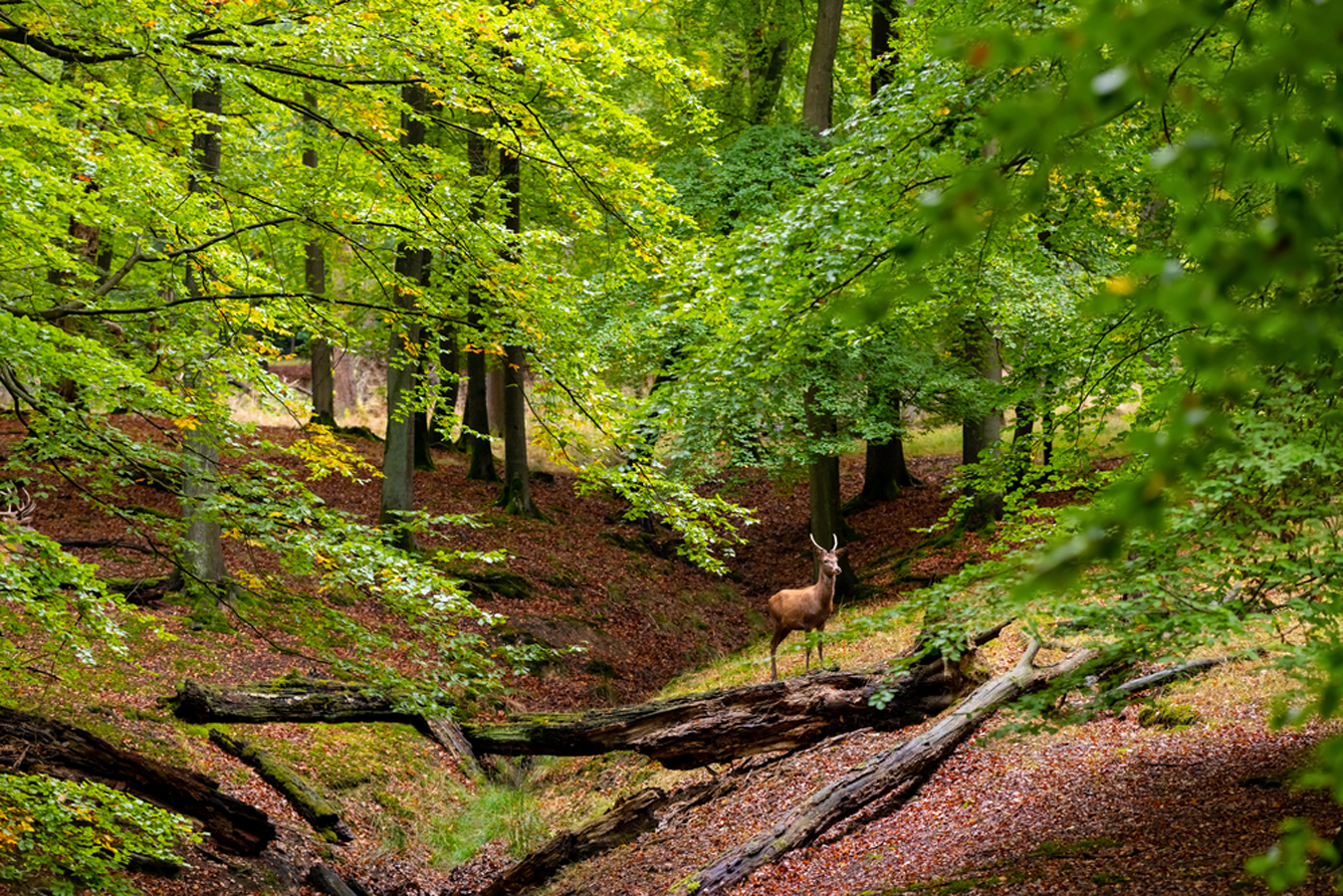
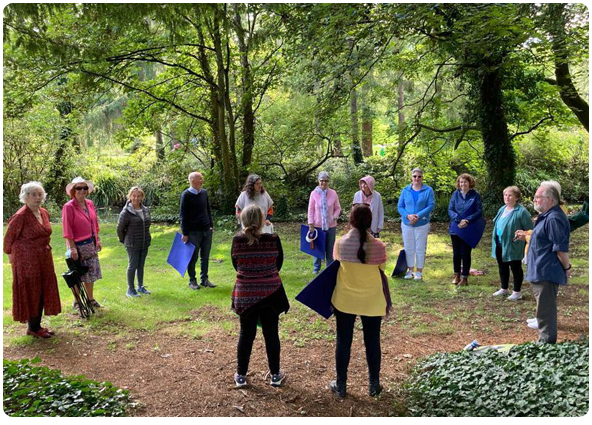
Lunch provided a wonderful opportunity to mingle and reconnect, or take time out to wander the beautiful grounds. To finish the day, Tom Larkin took us outside, on what was a perfect autumn afternoon for his "Focusing Journey in Nature". We sat on the grassy lawns while Tom guided us into mindful presence of the sensory delights around - gentle breeze, smell and feel of fresh-cut grass, sounds of children laughing drifting across the Tolka, white clouds drifting in an expansive blue sky… We then wandered the grounds, following our inner calling of where to go, when, at what pace, what to attend to... Something about this experience was innately grounding, settling and soothing: the felt sense unearthed earlier felt cared for, gently contained and safe, held in the womb of Nature.
While still sensitive, I came away from the day feeling refreshed, with a sense of expansion, contentment and hope. Today, I am still aware of how that day gave deep nourishment to my soul - meeting a need I did not know I had - the opportunity for face-to-face connecting in real time, in a space where vulnerable inner parts knew they could be safe and seen, where all of me could be accepted as I am. My deepest gratitude to our Focusing Community for the wonder of this all-too-rare experience. X
Why Read Gendlin’s Philosophy (and How to Begin)?
Why Read Gendlin’s Philosophy (and How to Begin)?
Eugene Gendlin was, among other things, a philosopher. His philosophical study and his own thinking was applied to his therapy practice as well as his development of Focusing and Thinking at the Edge (TAE). Reading his philosophy is not only a way to enrich our own Focusing practice, but it is a way to understand more about what is means to be human. That’s a big statement to make. It’s based on studying his philosophy over many years, usually in small reading groups where with pausing, reflecting, reading again, we considered questions like, ‘what does this say about life’? There were lots of ‘ah ha!’ moments: “Yes, I recognise that is what I do/think/act and it makes sense now!” It’s exciting!
Yes, it takes time and effort to get into Gendlin’s work. Reading in small groups is not only a good way to start, it’s companionable and enjoyable (add tea and scones to the session for extra enjoyment). And Gendlin’s own words help: the way to read philosophy he says is “many times”!
Where to start? Get together with a few people and start reading. It’s that simple. Then keep going, meaning will emerge as you wrestle with the text together. Keep it light. You might only get through one paragraph at a time, but it’s worth it. The article Margaret Quinn and I wrote in 2021, On Setting Up a Reading Group to Explore Gendlin’s Philosophy, based on our own experience of being in a reading group and on the suggestions that emerged from a TIFI Roundtable on the topic, might be useful. You can read that article by clicking here.
Gendlin also provides encouragement in his paper on FIVE PHILOSOPHICAL TALKING POINTS TO COMMUNICATE WITH COLLEAGUES WHO DON'T YET KNOW FOCUSING*. In it, he writes:“To think and talk about experience, language, the body, values and thinking is philosophy”. Focusers are already doing philosophy! This paper might be your starting text. There are other suggestions on ‘core texts’ provided in the Philosophy of the Implicit section of TIFI website. https://focusing.org/more/philosophy-implicit These should be enough to keep you going for a few years.
Happy philosophising!
Mary Jennings
*Five Philosophical Talking Points to Communicate With Colleagues Who Don’t Yet Know Focusing is available free to download from the Gendlin Online Library at http://previous.focusing.org/gendlin/docs/gol_2187.html
Ards Retreat Centre
Ards Friary Retreat Center 
Creeslough, Co. Donegal - Ireland.
Ards Retreat Centre have agreed to become the latest BioSpiritual Institute’s Designated Centre of excellence.
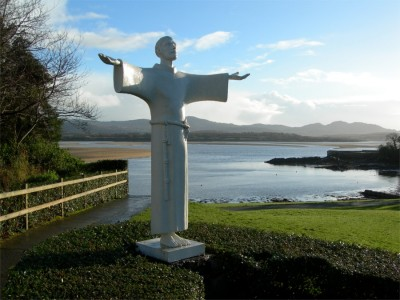
The Retreat Centre lies on the Wild Atlantic Way and is nestled in 200 acres of woodland on the shores of Sheephaven Bay. The extensive grounds offer a range of woodland walks and scenic views of the shore with the hills of Donegal as a backdrop.
Mission Statement
Our mission is to offer a place of religious and spiritual encounter to
all in a place of wonderful natural beauty; and to be a community that supports nature to express itself fully, utilising the best of current spiritual, ecological and environmental understanding and practice.
Our vision is one of a world that is naturally beautiful, bountiful, just and life-giving, where we are able to remember we are all interconnected in Christ, and learn to live as brothers and sisters with all of creation.’
http://www.ardsfriary.ie/index.htm
The team in Ards is undertaking intensive training in BioSpirituality and they hope to be able to offer BioSpiritual Focusing courses to the public in the not-too-distant future.
These courses will be offered to children and adults and will include an ecological dimension that will be fostered by the outstanding natural beauty of the setting.
We hope that Ards will be a place of sanctuary and deep learning for all who are on the journey of exploring the gifts of Focusing and BioSpirituality.
In keeping with their charism of recognising the world as one community, the team also plan to make the Ards Retreat Centre a model of living in tune with the environment. Towards that end they will be offering practical and educational opportunities through hands-on experiences and courses and workshops.
Tom Larkin, a Focusing trainer will be giving a workshop on Nature Connection in autumn 2022 (dates TBC). At the heart of the workshop are the practices of Forest Bathing, a contemplative practice to foster the relationship between the human and more than human world and the Work That Reconnects, a practice that helps people move from a sense of isolation to greater participation in the web of life.
We will keep you informed about other courses in Ards, and we look forward to seeing many of you there in the future to experience the warmth and beauty of this place for yourself.
If you have any questions, please contact John Keane This email address is being protected from spambots. You need JavaScript enabled to view it.
You can download a brochure for the Ards Retreat Centre by clicking here
Children Round Table with Harriet Teeuw
Children and Focusing Round Table with Harriet Teeuw
Hosted by The International Focusing Institute, May 31st, 2022
Theme: Exploring Nightmares with Children
The roundtable was attended by 30 participants from across the globe including Ireland, the UK, New Zealand, India, Canada, Germany, Hong Kong, Netherlands, Hungary, Romania, USA, and Guatemala.
Harriet expertly guided the group through strategies that empower children to “play” with their dreams in a way that allows the children to relate differently to their dreams. Allowing the children to “Love” their dreams by fostering a sense that they are in charge, that this is their dream, and they are the dreamer.
Harriet explained that frequently, the initial response to a dream is that the dream is in charge but resourcing the child to own and play with the dream can change that dynamic. Returning the locus of control to the child – the dreamer.
Her first invitation to the child is to listen to the dream together – sharing the experience and opening it gently for further exploration.
Harriet has many “steps” that allow for this opening, and she shared some of the most important ones with the group. My sense is that some of the most important steps are related to addressing/opening the scary dimension of the nightmare. These steps/questions included.
- What are the nice parts of the dream?
- If you had the power/ability of the scary part – what would that feel like inside?
- Harriet explained that usually nightmares end too soon - they end without a conclusion – so she invited the question “how would the child like the dream to end?”
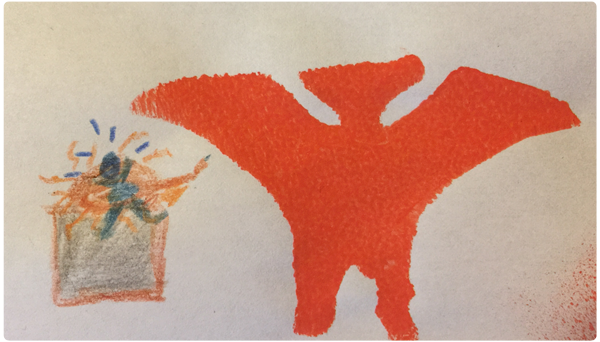
- Can you draw or express this dream?
- Is there anything you would like to do differently from now on because you understand this dream?
We were then offered two wonderful real-life examples of how Harriet facilitated the nightmares of a 5-year-old and an 11-year-old child. A real sense of her steps/questions coming to life in their experiencing.
This was followed by a gentle and sensitive exercise to work with our own dreams/nightmares – with time to draw what emerged. This drawing decreases the intensity of the nightmare and allows for a gentle relational distance. This provides the space for more to emerge.
Harriet then sensitively accompanied the feedback of several of the participants – providing the space for “more” to emerge. The question/step that seemed to resonate most with those adults was “how would you like the dream to end”. I am curious if the same resonance would be discovered in children.
Overall, it was a most enlightening and positive experience, and offers many possibilities in my ongoing offerings to children. The most positive aspect of this being decreasing the “scariness” of the dream, and in so doing, increasing the possibility of interaction and forward movement.
Thank you, Harriet, – and TIFI’s Children’s Team Rene, Laura and Joke.
Harriet can be contacted at This email address is being protected from spambots. You need JavaScript enabled to view it.
by John Keane