



Worlds of Focusing - Childrens Focusing

Each Newsletter will explore an aspect of the Focusing World you may not be familiar with. In this edition we will explore the world of Children’s Focusing.
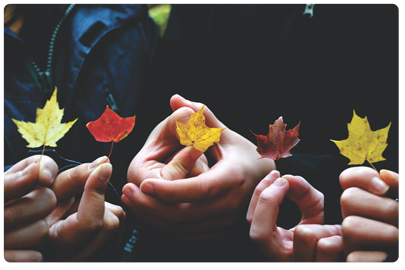
In my experience, children already have a vibrant sense of Focusing. Our education system and our culture etc often distance them from this vibrancy.
What a gift it would be if we could maintain this capacity in our children. Enabling them to enhance a sense of value and meaning within their own bodies, rather than having all valuing external to their own living.
The International Focusing Institute have understood the value and need for this enterprise and have a section of their website dedicated to the area of Children’s Focusing https://focusing.org/children-focusing/children-and-focusing
As you will discover from the above link. This community is active and passionate about the importance of sharing Focusing with the next generation.
I have had the privilege to attend the 2014 International Children’s Focusing Conference held here in Ireland. As well as presenting at the 2022 online conference and hosting a Children’s Focusing roundtable discussion in 2023.
I have had the opportunity to share Focusing with children in schools, as well as with my own daughter. I can honestly say that I have always learned more than I have ever offered in these gifting experiences.
If you are interested in this area of Focusing – a good place to begin would be with Marta Stapert and Erik Verliefde “Focusing with Children: The art of communicating with children at school and at home.”
Marta was a wonderful lady with a passion for sharing her wisdom with children and those who care for them, and is deeply missed by the Focusing community.
Mary Jennings had an early influence on the development of Children’s Focusing in Ireland. We are delighted to share some of her memories of this here.
John Keane
One evening in 2009, in All Hallow’s College, René Veugelers from The Netherlands, was in Dublin, giving a workshop on Children Focusing. It was a one-off event, part of a fundraising drive for a Focusing project in Gaza. René, in his inimitable way, offered ways to really listening to children, their hopes, their fears, their inner sense of rightness, in a natural and gentle way. And it was fun!
Later that evening, news of yet one more report on child sexual abuse in Ireland was published. A sense of deep anger arose in me, hearing yet again of how we treated our children in Ireland. Then, an epiphany: what if we had a way of really listening to children, giving them skills to trust their own instincts, what might happen? We had just been shown a way just this very evening! Instead of anger, I felt energised! What if there was a way to bring Children Focusing to Ireland to change the situation? René readily agreed to come and offer training. With a generous grant from the Irish Focusing Teachers’ Association (forerunner to IFN), over the next 18 months, 20 people were trained in the practice of Children Focusing. Among them were parents, grandparents, teachers and people working in children’s services.
Many of them are current members of IFN, who have used their training in Children Focusing in many different ways: listening to their own children and grandchildren in every day life; devising programmes in schools using Focusing, working with foster parents and children in care to improve services and relationships. Some have gone on to take further training in the practice and can train others to use Focusing with children in so many ways.
It was a start. A small bag of seeds. It would be great to think that, with regards to children that ‘all is changed, changed utterly’, but there is more to be done; let’s keep going.
Mary Jennings.
Review of Mindful Decisions, Wise Actions
Review of “Senses of Focusing, Volume 1”
Review of “Senses of Focusing, Volume 1”
edited by Nikolaos Kypriotakis and Judy Moore and published in 2021 by Eurasia Publications, Athens, Greece (565 pages).
Weighing in at over 1.2 kgs, this is one brick of a book! The contents are weighty too. There are 26 articles by Focusing writers from across the globe, exploring a very wide range of Focusing topics. The editors have very helpfully, loosely categorised these into seven sections. Equally helpful and most interesting are the snippets of Gendlin’s own spoken words that act as introductions to each of the seven sections. These have been extracted from the videos that Nada Lou made from Gendlin’s talks at various events between 1998 and 2007. [The videos from which these were transcribed and extracted are all available on Youtube see: https://nadalou.com/gendlins-spoken-volume-1/ ]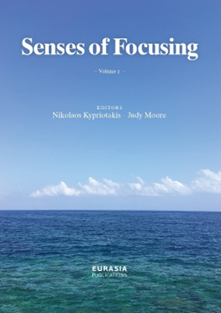 This is not a book to be read like a novel. It is more like a buffet where you can sample the contents through an abstract and then zero in on the one that most resonates with you at the time. This was my approach and it has taken me well over a year to read (and in some cases reread, then read again) all of the articles in this first volume. Many of the authors are therapists, some are philosophers and others neither. Three of them have given workshops or/and course in Ireland (Ann Weiser Cornell, Joan Klagsbrun & René Veugelers). Among the many topics written about are the practice of Focusing in different forms and cultures, the felt sense, the direct referent, the body in Focusing and some applications of Focusing in different settings and situations. As such this book is a treasure chest overflowing with gems and jewels. Every single article has something interesting, challenging, insightful, fascinating or/and impactful to impart, ponder and savour.
No, I don’t have a favourite! However, I will take just a few of the articles and say a bit about them. The introductory article by Judy Moore, “What is Focusing and where did it come from?” provides some fascinating background information on the origins of Focusing from the perspective of Gendlin himself and others who wrote about their experiences in the University of Chicago in the 1950s and 1960s, including Carl Rogers. Judy concentrates on the period from when Gendlin joined Roger’s group in 1952 until the late seventies by which stage Gendlin had formulated the ‘six movements of Focusing’. One thing I found particularly interesting was how Focusing came to be unshackled from its psychotherapeutic moorings. It would appear that during a major project begun in 1957, Gendlin and his colleagues started training non-professional volunteers, ‘ordinary’ people to help patients Focus “on the felt edge of experiencing”. This insight then informed the operation of the Changes groups of the 1970s in Chicago and other cities and indeed has gone on to make Focusing accessible to the many thousands who have brought it into their lives.
There are some intriguing article titles e.g. Focusing with Elephants in which Alan Tidmarsh points to the ‘elephant in the room’; the big issues that dominate the news headlines (Racism, Brexit, climate change, fake news etc) and those that never make it into the limelight, both of which are never really resolved and yet influence and impact on our personal and social realities in myriad ways. He says that “owning up to elephants is the challenge of our time”. He takes something Gendlin said in a 1966 article as particularly inspiring, “…even though we may have given up in our own lives we must turn back from having turned back…” In this regard he proposes three “superior” practices: Pausing, Noticing and Owning up. While we may all be familiar with the first two of these, he is asking us to take a wider, more wholistic perspective, “giving the elephant in the room the space it needs to be more connectable”. The third practice, owning up, is a call to authenticity – “the discovery of a personal truth that can then be carried forward”.
Another title that I was drawn to was Focusing is not a ‘thing’ in which Sarah Luczaj appeals for Focusing not to be ‘commodified’, formally packaged in programmes and organisations – she asserts that “Focusing can’t, through professionalism or in any other way, really become a thing, assume a fixed identity. It can, however, be treated and used by individuals as if it were”. As an aspect of this she highlights some people’s preoccupation with whether or not what they are experiencing is a ‘felt sense’. She, like others in their articles (Gendlin included), point to Focusing as a natural process in which most people engage to some degree or another. She acknowledges the tension between recognising Focusing as a natural process and the practice of training people how to use it. Taking her inspiration from Buddhist and Daoist practices which facilitate awareness of ‘the natural state’ she suggests that focusing can contribute to this through the first movement of Focusing, clearing a space, more specifically, a practice that “keeps us in the state of clearing a space” and which provides the welcoming conditions for a felt sense to arise.
And this is only the first volume! To even list the other articles’ titles would take up too much space, however, one can find out more about this wonderful, informative book and the contributors by going to a website developed around both books at https://sensesoffocusing.com/ There are also video presentations by, and interviews with, some of the contributors.
Becoming a Member of the International Focusing Institute
Becoming a Member of the International Focusing Institute
The International Focusing Institute (TIFI) is an international, cross-cultural organization dedicated to supporting individuals and groups world-wide who are teaching, developing and practicing Focusing and its underlying philosophy.
What the Institute does:
TIFI is committed to advancing the work of Focusing’s founder, Eugene Gendlin, and those who have built on his legacy.
TIFI promotes Focusing and encourages its application in a wide variety of settings.
TIFI is a hub for information and education about Focusing and Gendlin’s philosophy, as well as a catalyst for research on Focusing.
TIFI provides many opportunities for connection, dialogue and interaction among Focusers around the globe.
A personal note
When I became a member of the International Focusing Institute (TIFI) it was partly to support it’s work in promoting Focusing, but mostly because it was a requirement for certification as a Focusing Trainer. And then the pandemic happened….
Like everyone else, I was at home, restrictions were severe – remember when we could only travel 2 kilometres from home? For a while it was actually fun to explore what was within that limit. And I enjoyed finding creative ways around what was (or was not) available in the shops. But the limitations were trying too.
Then two things happened…
Mary Jennings suggested that we invite Focusers to gather online, and you all know how that story unfolded.
And I discovered TIFI “highlights” and “roundtables”! Suddenly, membership of TIFI was about a whole lot more than fulfilling a requirement for certification!
During that first year of the pandemic, I took part in the first online “weeklong” – an opportunity that I could not have availed of in person. I learned more about Gendlin’s philosophy, I developed a new interest in strands of Focusing that were new to me, and I met Focusers from all over the world! Now, I can’t imagine not having that connection to the world of Focusing. Membership of TIFI has opened doors, offered opportunities and created connections I could not have imagined in pre-covid days.
If you would like to support the Institute, here’s some information from the website:
Who Can Join?
Both Focusing Professionals and others who want to support Focusing are warmly welcome to join our vibrant global community. “Professional” membership categories are for those who are training or certified by TIFI to share Focusing with others as teachers, trainers, or therapists. Others may join in the “Affiliate” categories of Friend, Supporter, or Associate.
Benefits of TIFI Membership
TIFI members enjoy a wide array of benefits and opportunities, including:
- Discounts on TIFI-sponsored workshops.
- Free member-only events and online gatherings with Focusers around the world.
- Increased visibility with your profile in TIFI’s online Directory and “Find a Focusing Professional” search engine. (Professional members only).
- Publicize your Focusing workshops or Changes groups on TIFI’s website. (Professional members only)
- Free and low cost Focusing-related educational opportunities.
- Connect with other Focusers through TIFI’s email discussion lists and our website's new member-to-member search.
- Find a Focusing partner through TIFI’s Partnership Network (for qualified members only).
A full listing of the many benefits of TIFI membership is available at www.focusing.org/membership
Cost for membership can be found at https://focusing.org/membership/schedule-prices-membership-certification-and-pfp-award-effect-january-1-2022
Above all, your membership of the Institute is a way of promoting Focusing through education, research and community building.
by Margaret Quinn